Crown and Bridges

Dental crowns and bridges are essential dental restorations that help protect, strengthen, and restore your smile.

Strengthen and Restore Your Smile with Dental Crowns and Bridges

Dental crowns and bridges are essential dental restorations that help protect, strengthen, and restore your smile. Here’s what you need to know about these treatments: 

What Are Dental Crowns?

A dental crown is a cap that fully covers a damaged or structurally compromised tooth, providing strength and enhancing its appearance.  

When would you need a crown?

Cracks are commonly found in the back molars of individuals who grind or clench their teeth at night. They can also result from an injury, such as biting into a hard object. When a tooth cracks, it creates a pathway for bacteria to penetrate, often leading to cavities, increased sensitivity to hot and cold, and discomfort while chewing. A crown can help protect the tooth, prevent the crack from worsening, and shield it from further damage

When a tooth has extensive decay or a large cavity, removing the damaged portion weakens the tooth’s structure. A crown can help restore its strength and shape, rebuilding it into its original form.

Crowns can enhance the appearance of teeth that are discolored, misshapen, or do not blend well with the rest of your smile.

Tooth that undergoes root canal treatment typically requires a dental crown for complete coverage. These teeth are often already weakened by decay, which compromises their structure. Following root canal treatment, the tooth becomes brittle and more susceptible to breaking after the infected or necrosed nerve is cleaned out.  A crown is crucial to protect the tooth and prevent further damage after a root canal treatment. 

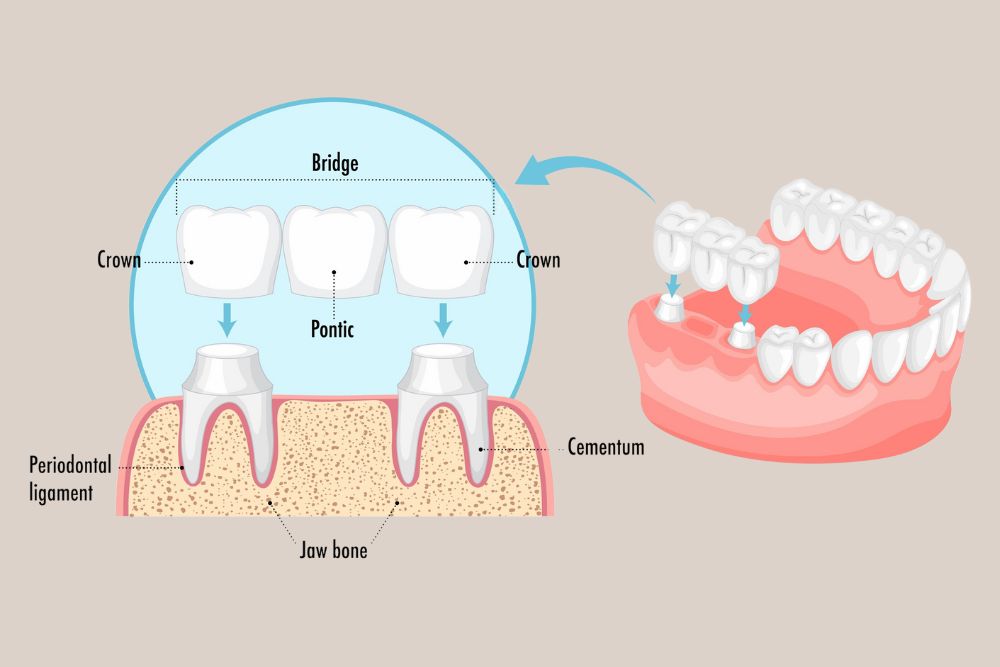
If you’re getting a dental bridge to replace a missing tooth, crowns are often placed on the neighbouring teeth to hold the bridge in place.

What Are Dental Bridges?

Dental bridges consist of two crowns on either side of the gap (missing tooth), with a pontic (a false tooth) in the middle that bridges the space. Bridges can help: 

Types of dental crowns

Zirconia

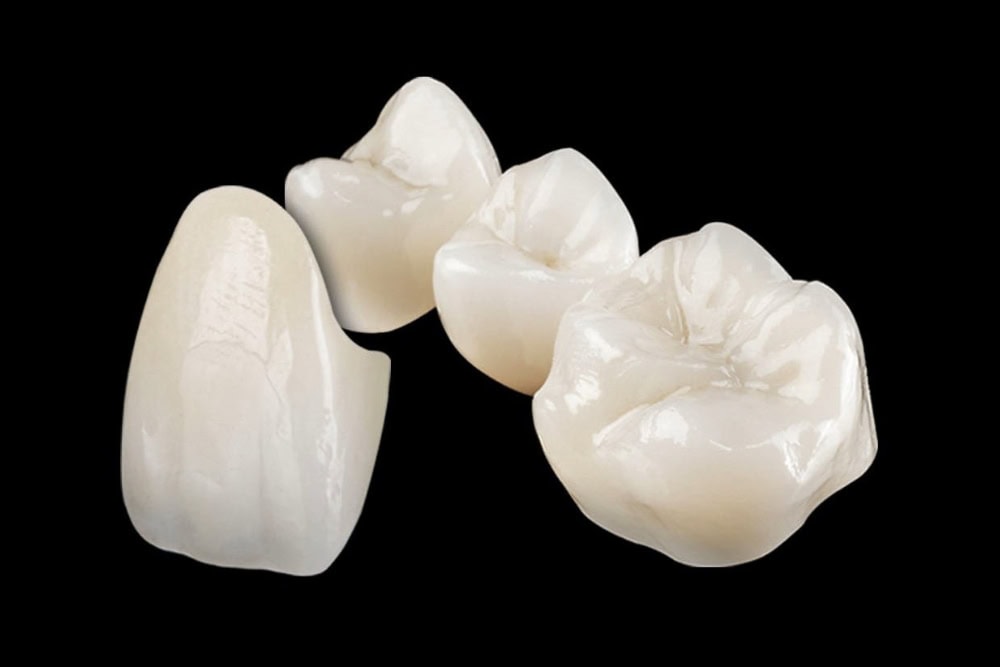
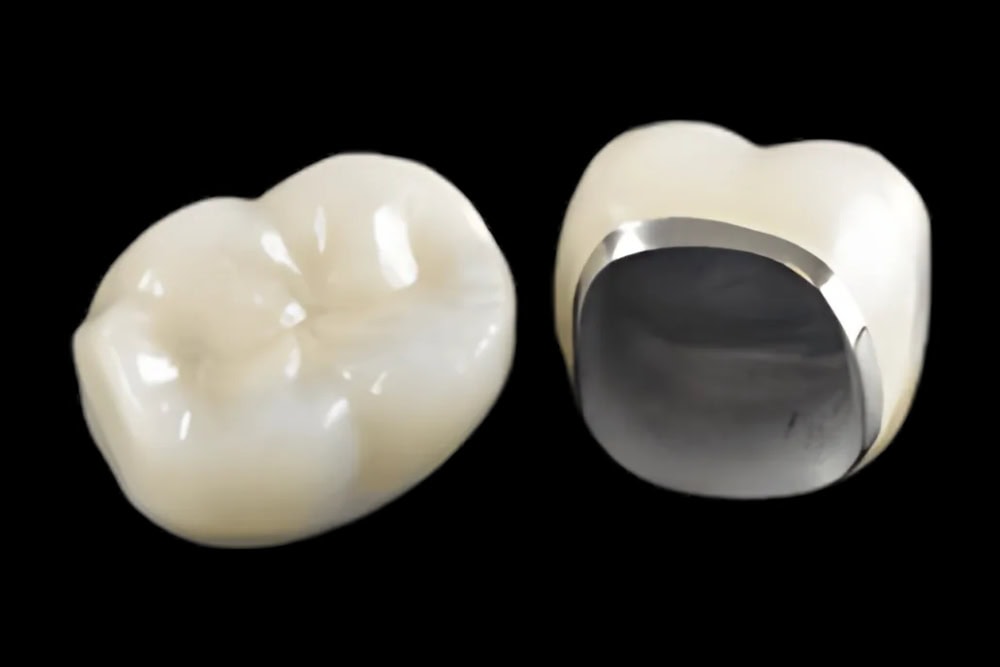
Zirconia crowns are exceptionally strong, highly wear-resistant, and difficult to crack. They offer an ideal balance of strength, durability, and aesthetic appeal, capable of withstanding the intense masticatory forces exerted on molar teeth. Additionally, zirconia crowns are more opaque than E.max crowns, giving them a slightly brighter appearance compared to natural teeth 

Ceramic (E.max)

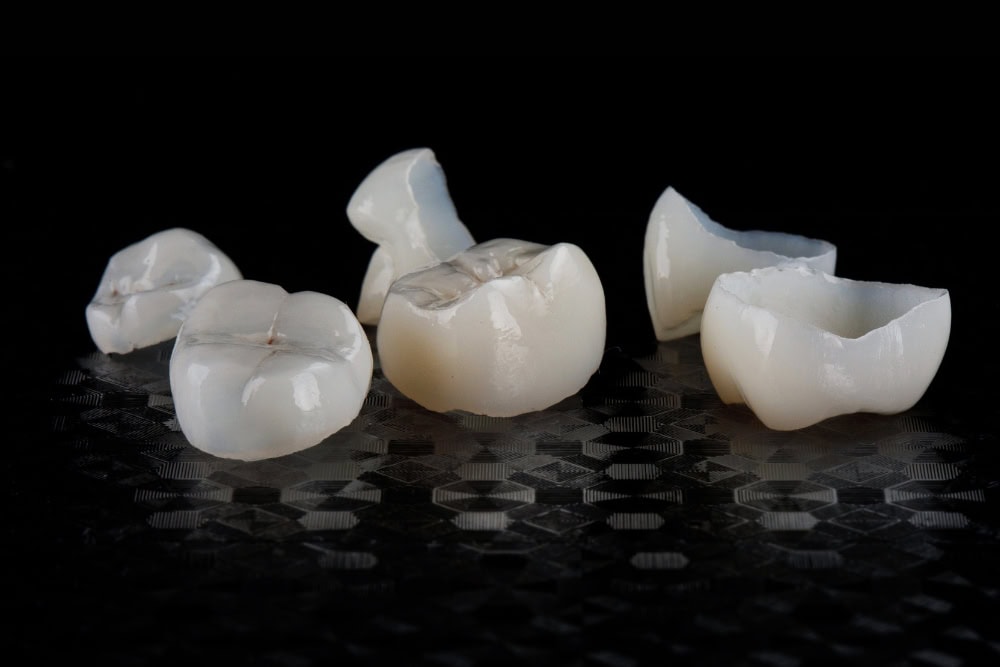
E.MAX is Lithium Disilicate glass, an all-ceramic system. It is one of the most aesthetically pleasing options, creating incredible translucency and a very realistic looking tooth that matches with other natural teeth. 

Gold

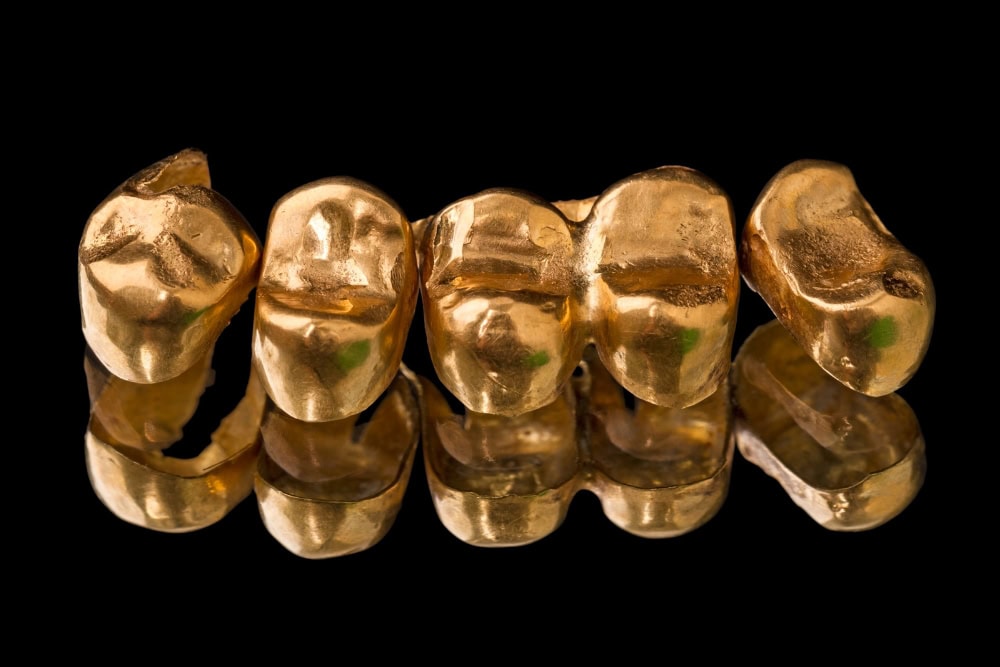
Dental gold crowns are a classic and reliable option for tooth restoration, renowned for their exceptional durability and longevity. However, their gold color makes them less aesthetically appealing, which can make them unsuitable for front teeth where appearance is more important. Additionally, gold crowns tend to be more expensive due to the high value of the material. 

Porcelain-fused-to-metal (PFM)

Porcelain Fused-to-Metal (PFM) crowns are made from a base of non-precious metal alloys, such as nickel, cobalt, or chromium, and are coated with a layer of porcelain to achieve a natural, white appearance. However, they require more removal of healthy tooth structure, as the preparation needs to be done in thicker sections to accommodate both the metal and porcelain layers. 

Metal

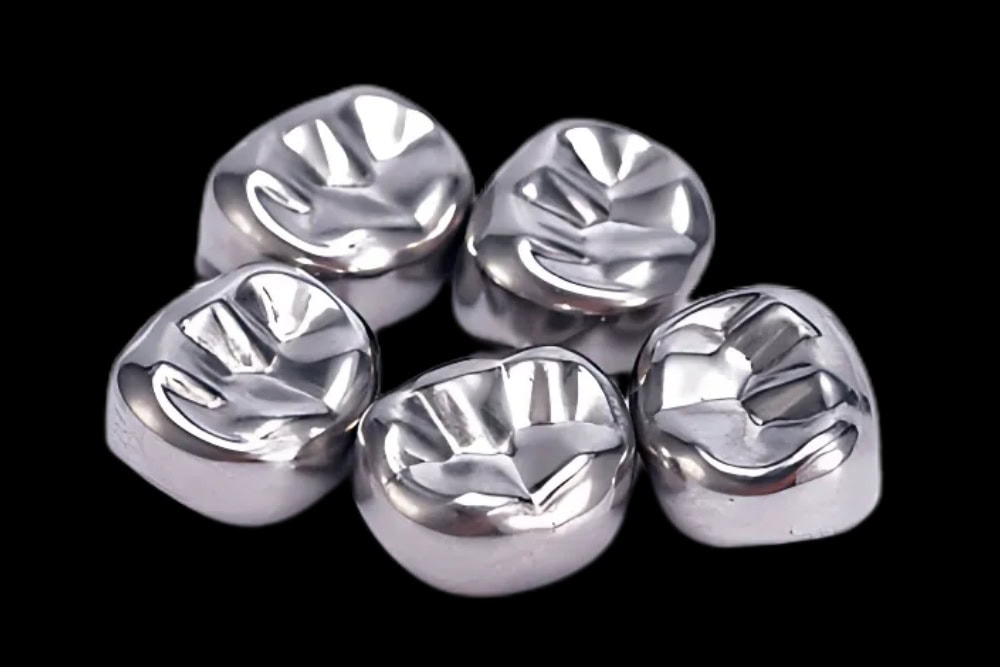
Metal crowns are a highly durable option for dental restoration, made from a combination of various metals. They are renowned for their strength and longevity, and require minimal tooth preparation. However, the main drawback is their metallic color, which makes them unsuitable for situations where aesthetics is a concern. Additionally, there is a potential for allergic reactions in some individuals, depending on the type of metal used. 

What is the procedure for a dental crown?

First Visit

An X-ray will be taken to assess the extent of decay, as well as any potential inflammation or damage to the tooth’s pulp. If the decay is severe, a root canal treatment may be necessary before placing the crown. 

The dentist will then numb to the tooth and prepare the tooth to create space for the crown. A 3D digital scan will be taken for crown fabrication. 

A temporary crown will be placed over the tooth to protect it while the permanent crown is being created. 

Second visit

The temporary crown will be removed. The new permanent crown will also be checked to ensure that the fit and colour matches naturally with the rest of the teeth before being cemented in. 

If it fits well, permanent crown will be cemented in place. 

FAQ

FAQs About Crown And Bridges in Malaysia

Interested in our services?

Similar to natural teeth, poor oral hygiene and the buildup of bacteria and plaque can lead to tooth decay under a dental crown. If proper care isn’t taken, food particles and bacteria can accumulate around the edges of the crown, creating an environment where decay can develop underneath. This is why it’s crucial to maintain good oral hygiene by brushing and flossing regularly.  

For a tooth that has undergone root canal treatment, the crown procedure is typically painless, even without local anesthesia. However, if the crown is being placed on a healthy (vital) tooth, local anesthesia will be administered beforehand to ensure the procedure is painless and comfortable for the patient. 

Most have a lifespan between 10 and 15 years. With proper care, a crown can usually last for decades. 

Crown And Bridges
Before And Afters

Patient Reviews

5/5

“I’m so happy I made a right choose to begin my Invisalign journey with Resmile- Dr. Estee! I’m so happy to regain my confidence and able to re-smile again ❤️”

5/5

“I’m so happy I made a right choose to begin my Invisalign journey with Resmile- Dr. Estee! I’m so happy to regain my confidence and able to re-smile again ❤️”

5/5

“I’m so happy I made a right choose to begin my Invisalign journey with Resmile- Dr. Estee! I’m so happy to regain my confidence and able to re-smile again ❤️”

Patients review:
What our customers say??

5/5

“I’m so happy I made a right choose to begin my Invisalign journey with Resmile- Dr. Estee! I’m so happy to regain my confidence and able to re-smile again ❤️”

5/5

“I’m so happy I made a right choose to begin my Invisalign journey with Resmile- Dr. Estee! I’m so happy to regain my confidence and able to re-smile again ❤️”

5/5

“I’m so happy I made a right choose to begin my Invisalign journey with Resmile- Dr. Estee! I’m so happy to regain my confidence and able to re-smile again ❤️”

Invisalign® Treatment
Before And Afters

Invisalign vs braces

Why Invisalign?

  • Invisible
  • Lesser dental visits
  • No dietary restrictions
  • Removable
  • Lesser Pain
Request Free Consultation