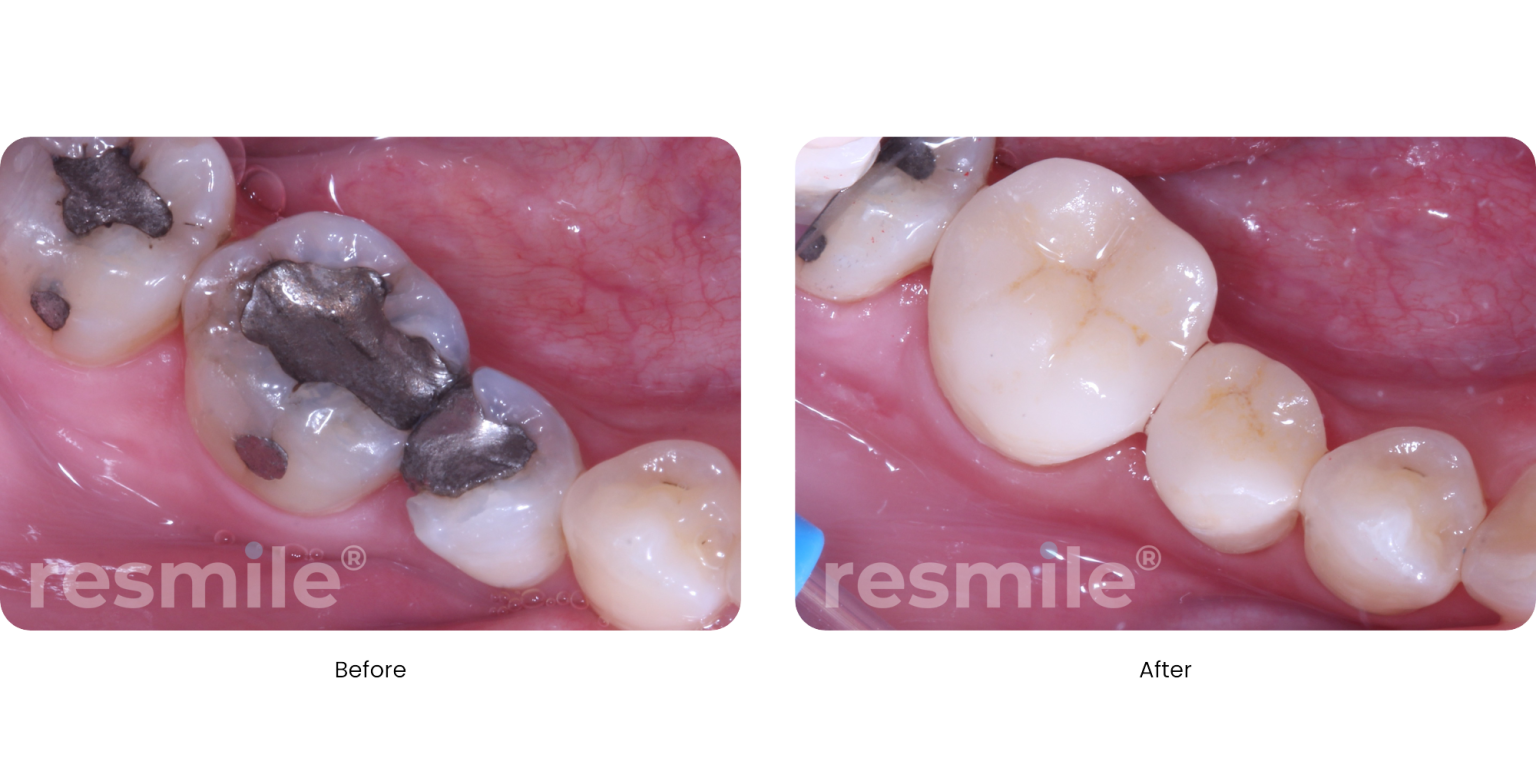
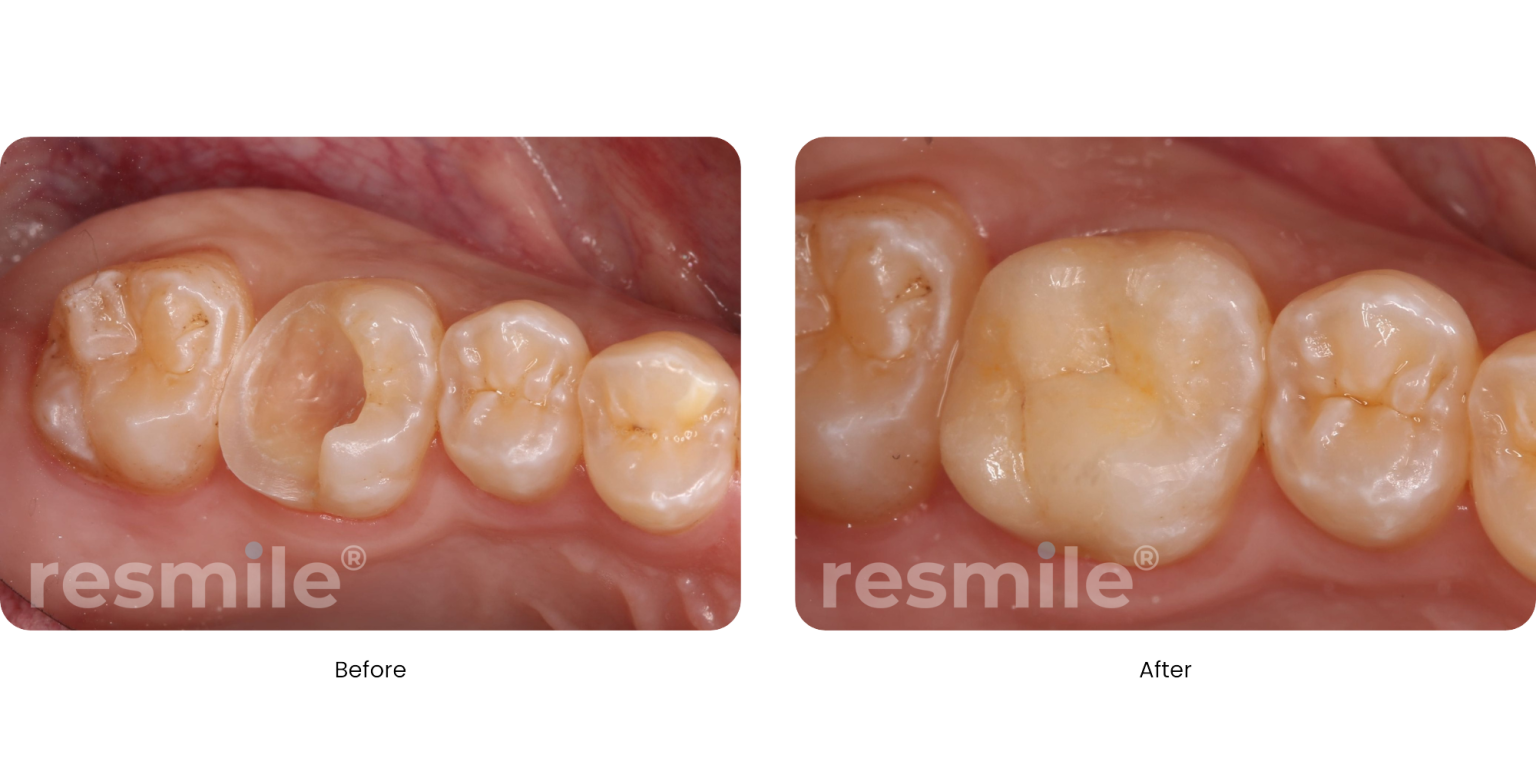
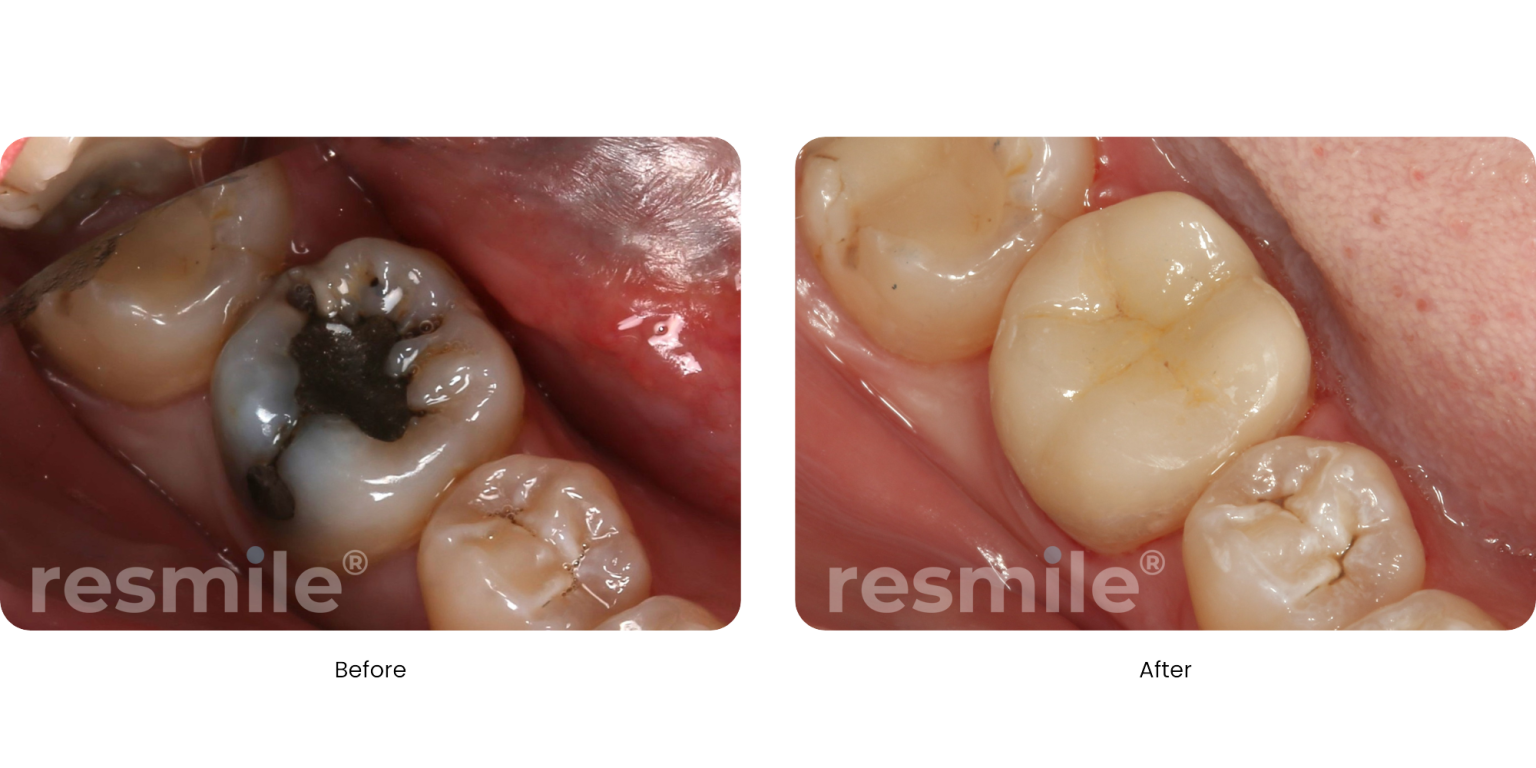
Inlays and onlays are types of dental restorations used to repair teeth with moderate to severe damage or decay.
Inlays and onlays are types of dental restorations used to repair teeth with moderate to severe damage or decay. They serve as more conservative alternatives to full crowns and are often recommended when the damage is too extensive for a simple filling, but not severe enough to require a crown.
Inlays are designed to fit into a large cavity, providing a more durable and stable solution than a traditional composite filling. They help restore the structural integrity of the tooth and offer better resistance to biting forces.
Onlays are similar to inlays, but they also cover the tooth’s cusps—the raised points on the top of the tooth. Onlays restore a larger portion of the tooth, including the biting surface, and provide additional support for the tooth structure.
The affected tooth and surrounding area are numbed with local anesthesia to ensure a pain-free procedure.
The dentist removes any old filling material and decay from the tooth. The cavity is then carefully cleaned and shaped to prepare it for the inlay or onlay.
A digital scan of the tooth is taken, and the inlay or onlay is custom-designed and fabricated in a dental laboratory.
Once the inlay or onlay is ready, it is securely bonded to the tooth. The dentist will check your bite to ensure proper alignment, making any necessary adjustments. The restoration is then polished for a smooth, natural finish.
Unlike composite fillings, which are more susceptible to wear and tear from biting forces over time, inlays and onlays offer greater durability and longevity. Composite fillings can shrink over time, leading to marginal leakage around the filling and an increased risk of secondary decay, eventually requiring replacement.
In contrast, inlays and onlays are crafted as solid pieces from durable materials like ceramic or metal, which do not shrink. These restorations provide superior structural support for the tooth, especially if it has been weakened by significant decay or cracks. As a result, inlays and onlays are often a more long-lasting and reliable option for restoring teeth.
Interested in our services?
The cost of Invisalign treatment may vary widely, depending on the complexity and duration of the treatment. Typically, the cost can be determined during the initial consultation.
The duration of Invisalign treatment depends on the complexity of the case. Some treatments may take as little as 6 months, while the average treatment duration ranges from 6 to 18 months.
The answer is a resounding NO! It’s never too late to achieve the smile you’ve always dreamed of, as long as your gums and teeth are still healthy. There is no specific ae limit for Invisalign treatment.
In short, yes. While patients were once told that they only needed to wear their retainer for a year or two, advancements in orthodontics have demonstrated that maintaining optimal results requires lifelong retainer use.
For best results, the aligners should be worn for 20 – 22 hours a day.
The aligners have smooth margins and won’t irritate the inside of your mouth. Some pressure during the first few days after aligner change is completely normal. This is a good sign, as it means the aligners are moving your teeth.


“I’m so happy I made a right choose to begin my Invisalign journey with Resmile- Dr. Estee! I’m so happy to regain my confidence and able to re-smile again ❤️”